PCR as a fair housing tester in 1962

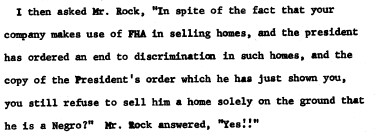
Clip from the affidavit reading: I then asked Mr. Rock, "In spite of the fact that your company makes use of FHA in selling homes, and the president
has ordered an end to discrimination in such homes, and the copy of the President's order which he has just shown you, you still refuse to sell him a home solely on the ground that he is a Negro?" Mr. Rock answered, "Yes!!"

In 1962, my father participated in fair housing testing of a development benefiting from Federal Housing Administration financing.

Classic paired fair housing testing involves Black and white homeseekers inquiring at the same home or apartment, potentially learning that the seller or landlord will sell/rent to the latter but not the former. This practice was endorsed by the Supreme Court in 1982 in the case of Havens Realty Corp. v. Coleman, 455 U.S. 363, 374 (1982) holding that, in such situations, the Black tester had standing to sue the housing provider for discrimination. By 1982, however, at least some subtlety was required: in Havens, a Black tester inquired and was told no apartment was available; in a separate inquiry, a white tester was told there were vacancies. Id. at 368. In this way, non-obvious discrimination can be identified and challenged.

In 1962, when the Fair Housing Act was still six years in the future – and the relevant Executive Order hot off the presses – testing required no subtlety whatsoever. Below is a draft affidavit my father prepared detailing his role in a paired test.

STATEMENT BY PETER C. ROBERTSON TO SUPPORT COMPLAINT BY KARL D. GREGORY FILED WITH THE FEDERAL HOUSING ADMINISTRATION

I am Peter Robertson, [STREET ADDRESS REDACTED] Washington, 16, District of Columbia. On December 15, 1962 I accompanied Mr. Karl D. Gregory and his wife and child and Mr. Marvin Caplan in a visit to the Belair project of Levitt and Sons, Incorporated, at Bowie, Prince George’s County, Maryland. Mr. Gregory’s purpose in going to Belair was to purchase for the personal use of himself and his family a personal residence from those offered for sale by Levitt and Sons, Incorporated.

Upon arrival at the project Mr. Caplan and I went immediately to the sales office. Mr. and Mrs. Gregory and their daughter went to look at the model homes. When we arrived at the sales office we engaged in conversation one of the men standing behind the counter and appearing to be a salesman. We did not obtain his name. This salesman indicated in answer to our questioning that there were a number of houses available. He indicated that there were some available for short term delivery at reduced prices which had been quoted in an advertisement in the morning paper (Washington Post, 15 December 1962), and that there were a number of houses available for later delivery at the non-reduced prices. He further indicated that a potential buyer could be assured of obtaining financing insured by the Federal Housing Administration of the United States Government and thus a low down payment. In fact, he indicated to us that the prices which appeared in all of the published advertising issued by Levitt and Sons, Incorporated, were based on the assumption that the buyer will purchase the house with a mortgage insured by the Federal Housing Administration.

I had called on the telephone prior to going to Belair and had been given similar information over the telephone by the Levitt and Sons, Incorporated, salesman who spoke to me on the phone. Thus the low down payments which are offered by Levitt and Sons, Incorporated, both in person and over the telephone are possible only if such a mortgage insured by the Federal Housing Administration is obtained. A down payment more than four times as large is required if such insurance is not obtained. Thus does the participation of the Federal Government materially aid Levitt and Sons, Incorporated, in the sale of residential housing.

After Mr. Caplan and I had discussed the financing arrangements Mr. and Mrs. Gregory came into the sales office and Mr. Gregory indicated that he was interested in buying a home. The salesman, Mr. Herbert Rock, declined to give the Gregorys an application stating that it was against the policy of his company to “accept applications from Negroes.” Mr. Gregory then asked if the sole reason for not making the sale was that he was a Negro. Mr. Rock replied, “Yes.”

Mr. Gregory then asked Mr. Rock if he had read the Executive Order (11063) of the President of the United States prohibiting discrimination because of race in the sale of residential housing where such housing was financed, or where the financing was insured, by the Federal Government. The answer was to the effect that Mr. Rock had not read the order but that he assumed that Mr. Levitt had. Mr. Gregory then read Mr. Rock some parts of the executive order and then asked again, “Do you still refuse to sell me a home?” Answer, “Yes.” Then, “Do you still base this refusal solely on the fact that I am Negro.” Answer, “Yes.”

I then asked Mr. Rock, “In spite of the fact that your company makes use of FHA in selling homes, and the president has ordered an end to discrimination in such homes, and the copy of the President’s order which he has just shown you, you still refuse to sell him a home solely on the ground that he is a Negro?” Mr. Rock answered, “Yes!!” Mr. Gregory then requested to know the amount of the initial deposit that would be necessary for a potential white buyer to commence the processing of an application. Mr. Rock said that it took one hundred dollars. Thereupon, Mr. Gregory handed him some cash, Mr. Rock counted it and verified — at Mr. Gregory’s request — that there was, in fact, one hundred dollars. He refused to accept the money, however, repeating that a sale to a Negro was against the company’s policy. He handed the money back to Mr. Gregory and said. “Now you have your case.”

On several occasions in addition to those specifically cited above Mr. Rock explicitly said that he was refusing to sell a house to Mr. Gregory solely on the ground that Mr. Gregory was a Negro, and that he was acting on instructions which reflected the official policy of the company for which he worked.

I, Peter Robertson, [ADDRESS REDACTED] Washington 16, D.C., do hereby state that the foregoing is a true statement.

“Now you have your case.”

Levitt & Sons were the builders of the infamous Levittown and similar developments around the country. These development were made possible by FHA loan guarantees which, in the 1940s and 1950s required that each home have a restrictive covenant: a clause in the deed prohibiting resale to Black people. That’s right, our government mandated housing segregation in a program that created several generations of white family capital. (Richard Rothstein’s The Color of Law: A Forgotten History Of How Our Government Segregated America” is a brilliant account of this and similar programs.)

On November 20, 1962, President Kennedy issued Executive Order 11063, 27 Fed. Reg. 11527, prohibiting discrimination in federally-supported housing. My father’s test took place less than a month later.

Throughout the 28 years of our work at Fox & Robertson, my husband and I have had many occasions to work on civil rights testing issues, from Tim establishing the gold standard for Americans with Disabilities Act tester standing in the Ninth Circuit, to my work on a team defending the practice in an amicus brief to the Supreme Court. But I had learned about basic paired testing long before, from my father, around the dinner table (metaphorical dinner table – more likely on some early morning figure skating commute). My father admired the practice and later urged us to use it in our disability rights cases, which we did to excellent effect. Throughout it all, I had no idea he himself had been a tester.
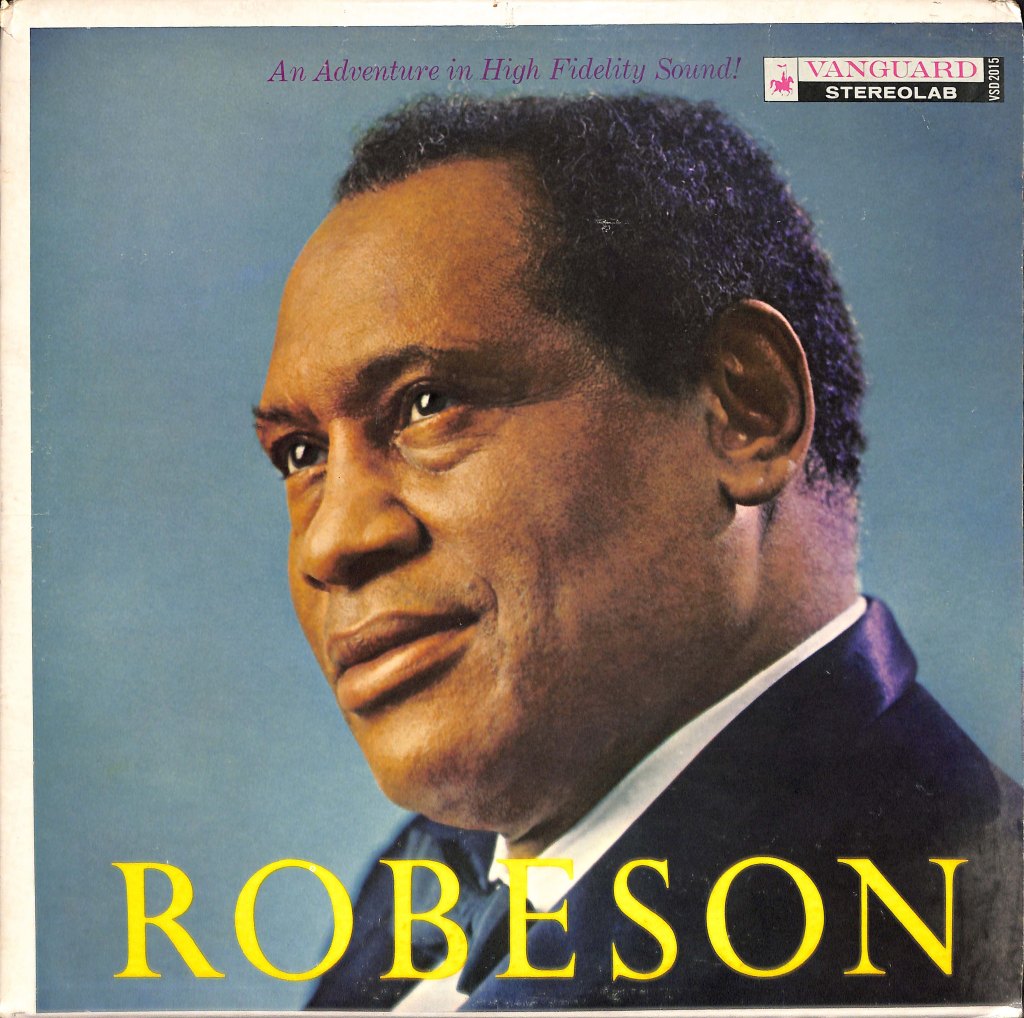
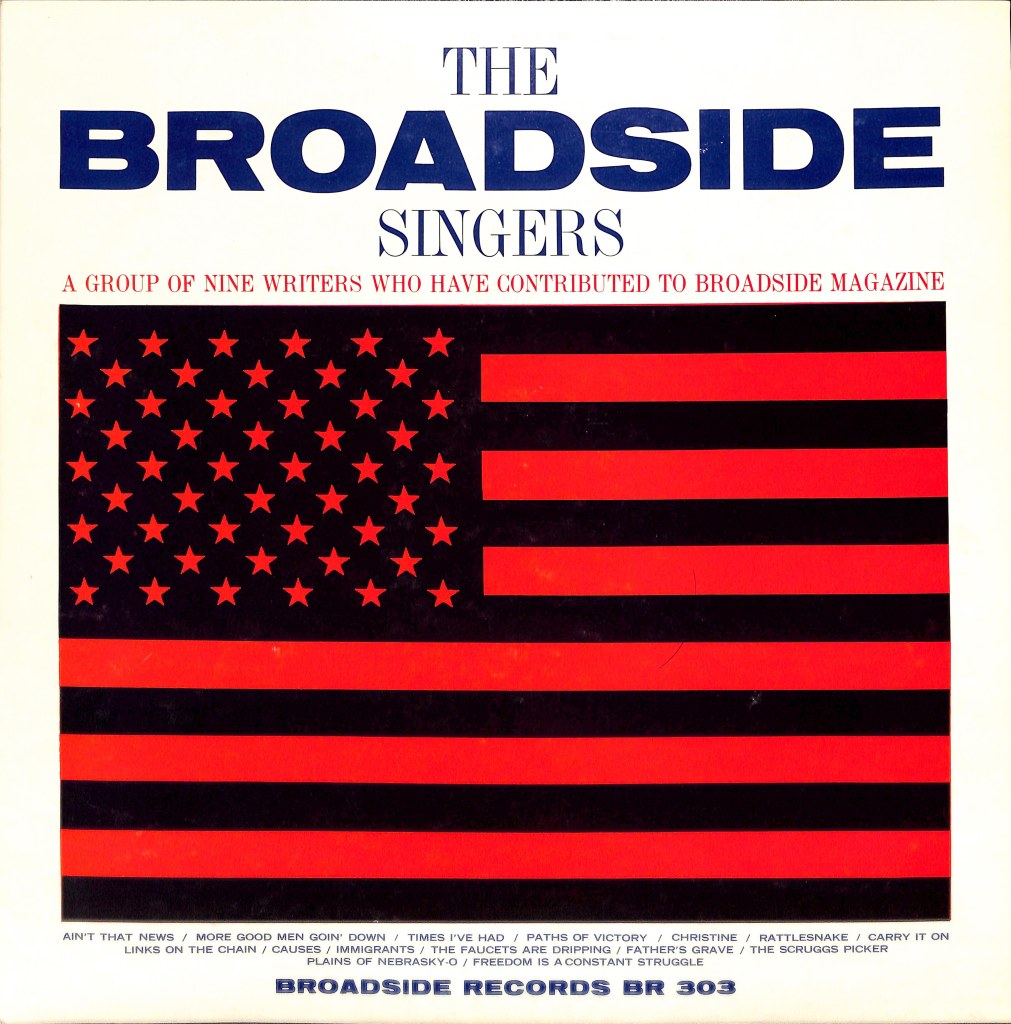
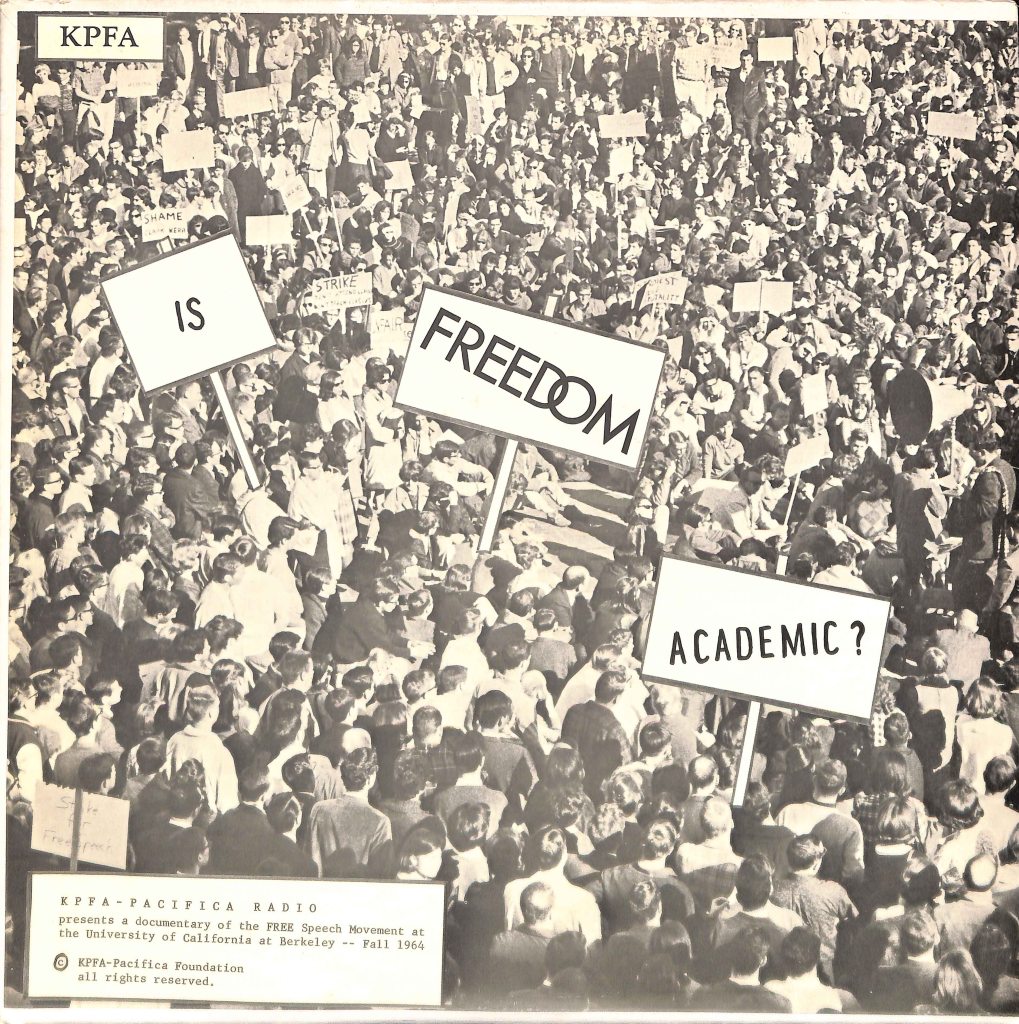
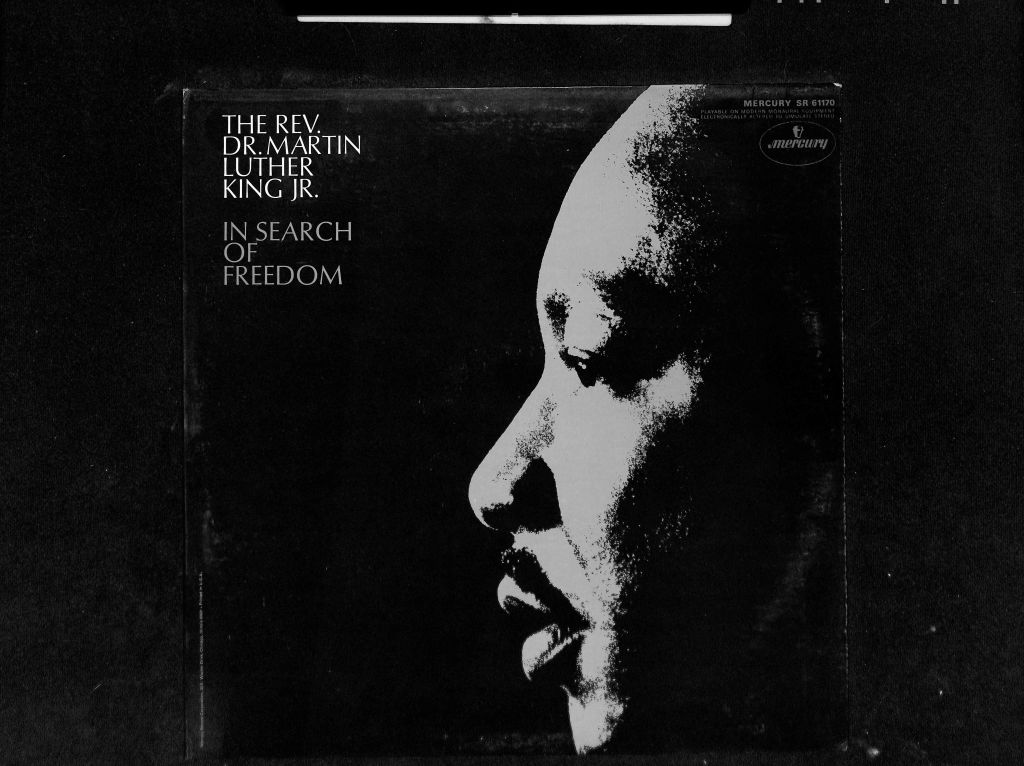
PCR’s LP collection: folk songs, train songs, civil rights songs, Russian songs, and a bunch of political nerdery.

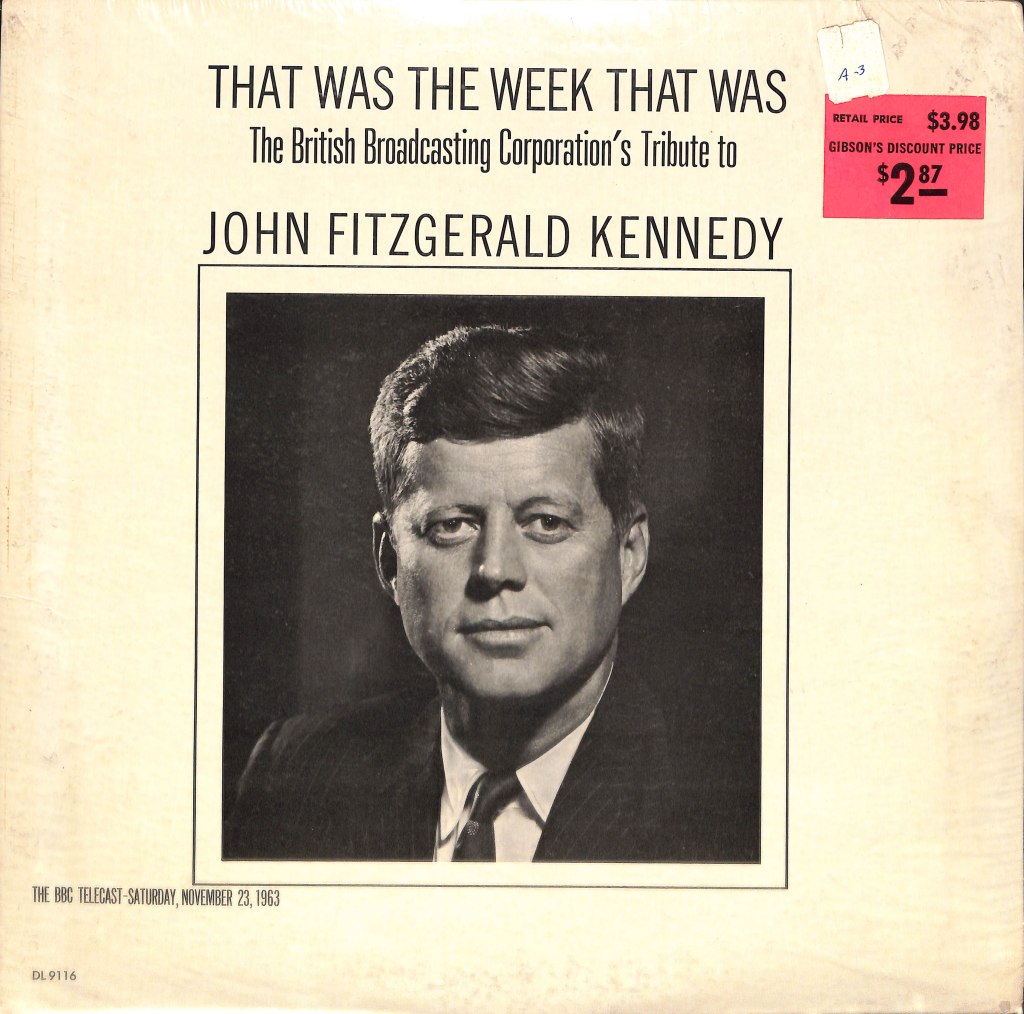
My father couldn’t carry a tune with a forklift, but boy did he love to sing. I have hilarious memories of him encouraging us to sing in the car, with the result that he and I would belt out “Roll On Columbia” together while my more musically-astute mother and brother cringed in their respective seats. After Dad passed in 1997, I got his collection of LPs, which I stored and moved and lugged around thinking I’d transfer them to digital media someday. Of course not. This year, I gave them to the Colorado Cross-Disability Coalition where they will feature in future fundraising efforts — stay tuned! Before sending them along, I took photos of some of the most memorable, most Dad-resonant, of the covers.

His collection consisted of folk songs; political songs (big overlap with folk songs); train songs; spirituals; historical songs; historical speeches and voices; comedy (I swear to God we had George Carlin’s Seven Words on LP but I couldn’t find it); two children’s records; and a number of records in Russian including Paul Robeson and the Red Army Chorus.

Note: All of the images below have alt text describing both the images and text on the pictured LP covers.

Folk Songs & Political Songs starting with his all-time favorite singer, Pete Seeger. Note that the Darling Corey album was so old he was called Peter Seeger.

Political/topical songs:

Train songs:

Paul Robeson, in English and Russian

And

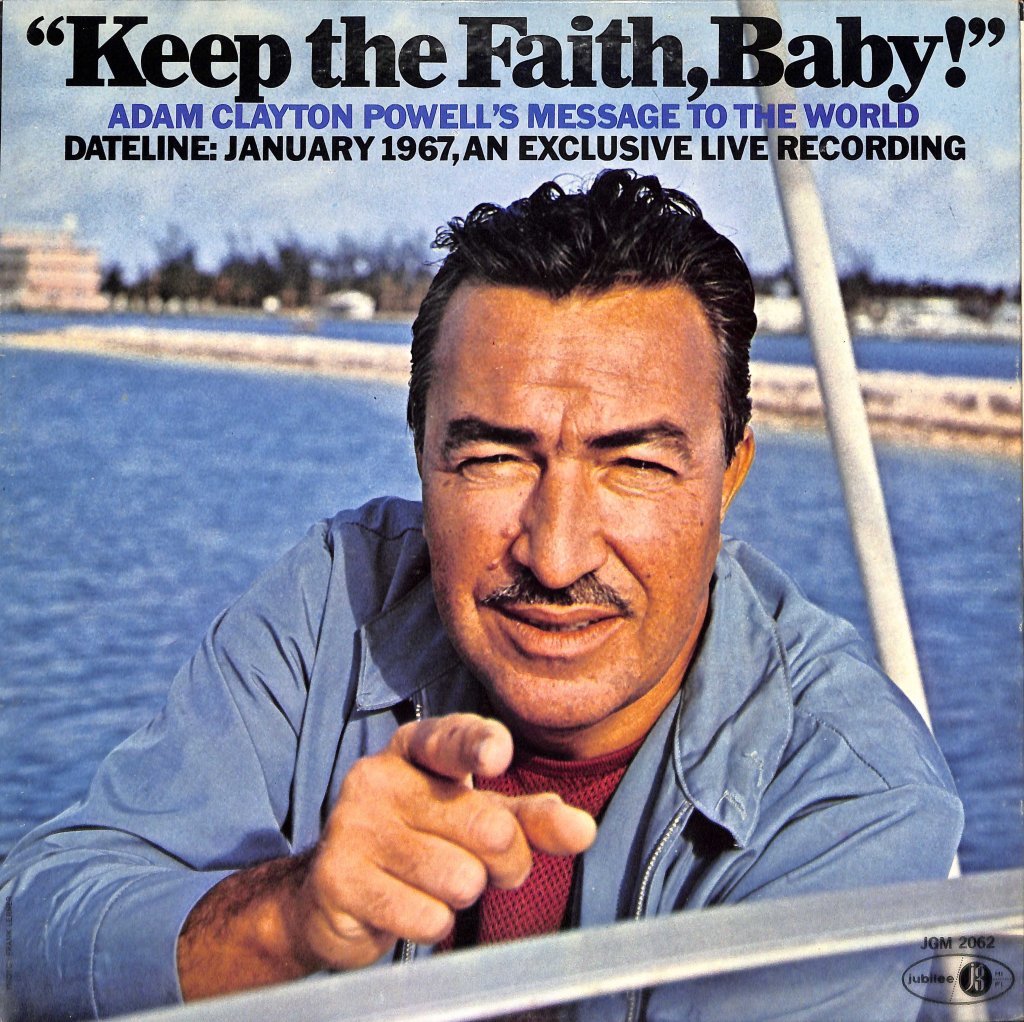
Political speeches and voices, starting with Adlai Stevenson and Chester Bowles, two quixotic campaigns to which my Dad devoted a lot of time and energy:

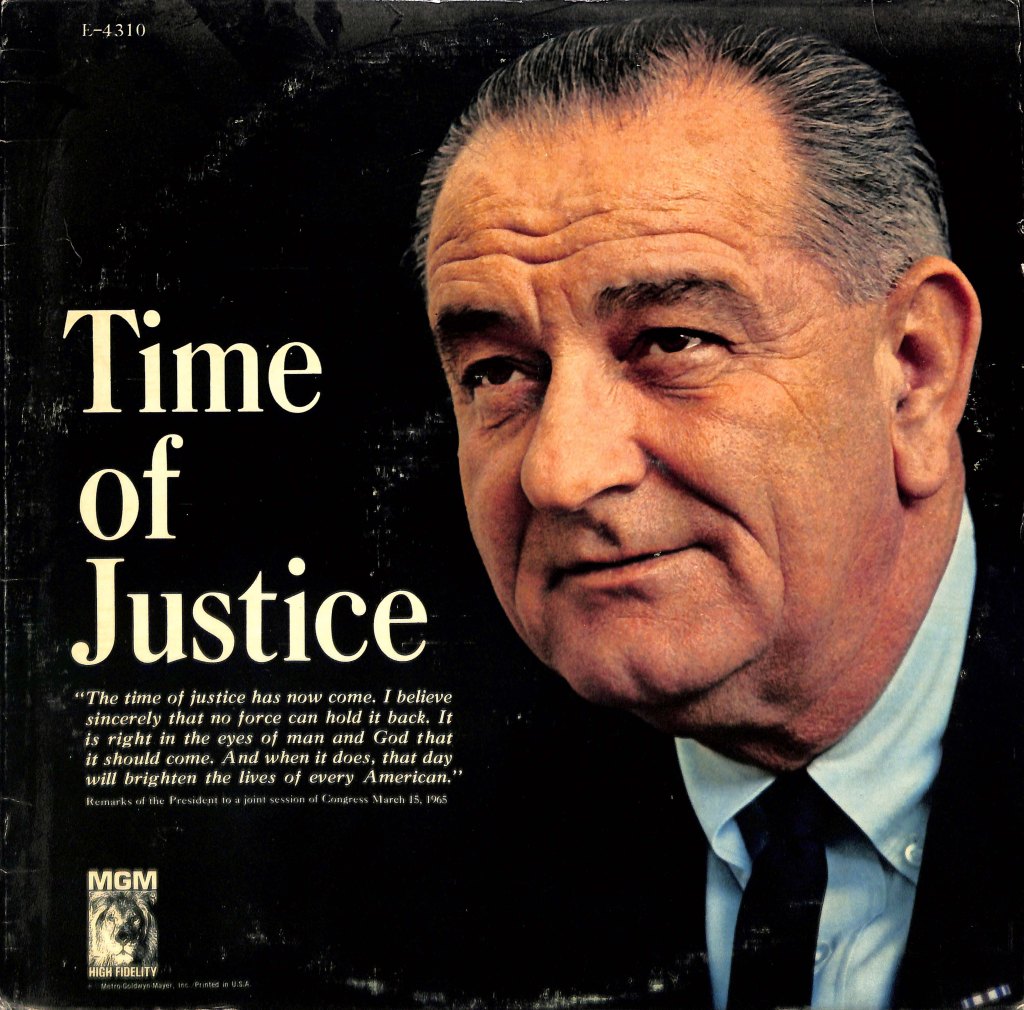
This astonishing record in which various stars of the day spoke about the EEOC and Title VII of the Civil Rights Act of 1964, the agency and statute to which my father devoted his entire professional life.

And more history and political nerdery:

Comedy:

Two children’s records, which I remember fondly, though I regret that the delightful teachings of the Philadelphia Orchestra, Cyril Richard, and Benjamin Britten in the “Peter and the Wolf Young Person’s Guide” did not really stick.

And finally, three more records in Russian, two of which I can identify from my father’s handwritten notes — the Folk Song Chorus from Omsk and the Red Army Chorus — and the third my Russian-fluent mother has informed me is gypsy music.

Rev. William Clendenin Robertson

My father’s grandfather was William Clendenin Robertson, an Episcopalian minister and pastor at Christ Episcopal Church in Chattanooga, Tennessee. In a eulogy for his cousin, Harold Hinton, delivered in October 1993, my father told the following story:

There is much about our grandfather of which to be proud. The family story that means the most to me, as told by my father, Arthur Clendenin Robertson, was about the time the (then-called) colored church in Chattanooga burned down and our grandfather, after inviting the African American parishioners to worship in his church, discovered a note from the Ku Klux Klan tacked to the door threatening to burn down the church if he continued his abhorrent ways.

My father tells me that grandfather turned the note over, tacked it once again to the door with a message to the Klan on the other side that he planned to sleep in the church and if he caught them trying to burn it down, he would beat them over the head with the cross.

EEOC Diary: February 23, 1967

Title: EEOC Diary

Date: February 23, 1967

Overview: PCR keeps a diary of his first two months working at the Equal Employment Opportunity Commission. For background on this diary, see the earlier post “EEOC Diary: February 6 to April 4, 1967.” I still haven’t finished proofreading the whole thing, so I still don’t have a link to the full document. Here’s an excerpt from February 23, 1967.

Introduction: In this segment, he relates a discussions with Al Blumrosen concerning what he then called “affirmative action” but which would now be called “voluntary compliance.” Toward the end of the excerpt, he calls it “accelerated voluntary action.” Perhaps we should have adopted that terminology!

We had lunch together very early after my arrival and I have had numerous contacts with him since. He quite early expressed the view to me that the key struggle going on within the agency was basically the struggle between what he called the “hawks” and the “doves”. By this he meant that the “hawks” were those who favored a strong enforcement approach and that the “doves” were basically those who favored using the affirmative action approach under which individuals who were considered to be discriminating were urged to take voluntary action to amend their ways. He indicated that one of the current on going disputes that focused this issue was the dispute over what would be done by way of follow up to the EEO-1 forms and whether they would be used for the basis of initiation of enforcement action or simply as triggers for the initiation of other commission action under which individuals who were low utilizers would be called in for discussions as to the reasons for their low utilization and gentle request that they take action to improve the situation. Of course, my own leanings are very much along the lines of strong enforcement. But I have recognized throughout my entire service in Missouri that there is a real conflict and pressure upon an agency as to how to handle this problem. I deeply believe that in the long run the in depth change in employment patterns that we want to achieve in the United States economy will depend in large part upon voluntary action which employers take to increase their recruitment of minority group members. Although emotionally I can make and could accept an argument for preferential treatment based upon past inequities it has always seemed to me unfair, and if not unfair at least politically impracticable, to make a demand that an individual employer conduct preferential treatment. The economic pressures of making a profit which are imposed upon individual private employers and the realistic pressures of getting the work done that are placed upon any employer make it very difficult for him to accept in a slot an individual less well qualified than the best obtainable. But I have also felt that to frame the question in these terms really does not adequately define the problem. Many employers hire large quantities of marginally skilled workers and train them on the job for a wide variety of tasks. The thing that has always bothered me in this context is the layer of subjective discrimination about the trainability of the Negro that seems to keep the Negroes from getting into these jobs in a degree which is proportionate to his numbers in a given area. As to any one particular individual it is always possible for an employer to make a logical argument that that individual does not meet certain objective criteria but when the net impact of the thousands and thousands of individual cases is that the average Negro ends up being excluded a great deal more often than the average whites and you have a serious dislocation in the economy and misallocation of resources. I relate this back to my original thought about preferential treatment by saying that it is my feeling that the massive inroads which I want to see made into the discriminatory patterns against Negro in the American economy are only going to come when the employer realizes that his existing pattern for whatever objective or subconscious reasons is resulting in an exclusion of Negroes and puts the pressure on his personnel office to deliver in the employment field as he puts it on his other top level management personnel to deliver in their respective fields. For example, if a salesman or a sales manager were told that his quota for a certain month were to sell a certain number of units and he consistently failed to meet the results the company president would not be interested particularly in the reasons if he thought he could get someone to replace the sales manager who would deliver results. Similarly, in the long run it is always been my feeling that the leaders of industry have to take the position with their personnel manager that they want to see a reasonable quantity of Negroes employed in the business and that when these results fail to be achieved they are not really interested in the reasons or excuses and that they replace the personnel manager with someone who will get results. Now– this ties back in to Al Blumrosen’s dispute between the hawks and the doves in a theoretical sense with the argument that if you are going to try to get the leaders of industry to undertake this kind of action you want them to be friendly with you. If you undertake vigorous enforcement against them they will become unfriendly and will not undertake the voluntary actions which you want.
Now I stated that I felt this was somewhat of a conflict that would torture the soul of those trying to administer fair employment practices agencies and to the question of whether they allocate their resources heavily for enforcement or for attempts to obtain voluntary action. I resolved this appearing controversy in a fashion which is perhaps shaped considerably by my own assumption. I start with the assumption that most businessmen are simply at best non-crusaders interested in producing their product and very difficult to convince that they should enlist in a social cause. The fact that this social cause may in the long run produce the extra production benefits of increased efficiency in their own operation and an improved labor market in terms of supply of skilled workers is irrelevant to the fact that they view the kind of accelerated voluntary action which I anticipate to be necessary as basically a charitable act on their part and one which they are generally ill inclined to take. I said at best they are non-crusaders – – at worst many of them are still subjective or even overt discriminators against Negroes feeling that generally Negroes are unsuited for the work in their plants and unqualified and willing to engage after some pressure in some form of token hiring but not willing to engage in any meaningful overall change in their employment patterns unless extensive pressure is put on them. I remember in the course of the Rives School District case in Missouri we consistently told each other that that school district would do nothing more than it was “forced to do”. It is quite frankly my feeling that this is the view and the posture of most employers and that the necessary first step to obtaining from them meaningful voluntary action is an enforcement procedure to convince them of two things. First, they need to be convinced that if they do not obtain results there will be a penalty for failure to obtain results and that this penalty will be administered through the enforcement procedures of fair employment practices legislation. Secondly, many businessmen now simply refuse to believe that there is a need for them to undertake action within their company to change this employment pattern. Most of the larger firms have at the top undertaken to enunciate a strict policy of nondiscrimination but they simply will not believe that this policy is being carried out at the lower level so one of the reasons that you need strong enforcement is to root out and find the provable deliberate or subconscious discrimination at the lower level and convince higher level management of its existence so they can undertake the remedial action that you feel necessary. I remember for example the remarks of the employment manager of McDonald Aircraft, a company which has one of the strongest reputations for affirmative action in this field — during the heat of the investigation of a complaint against them when he turned to me after proud protestations of nondiscrimination and a good company attitude and shouted “who the hell are you going to believe me, the white company personnel manager, or some unemployed Negro.” Needless to say the unemployed Negro was a Negro who they had discharged and who had filed the complaint.

Note, too, that this problem has persisted for almost 60 years: ”Most of the larger firms have at the top undertaken to enunciate a strict policy of nondiscrimination but they simply will not believe that this policy is being carried out at the lower level.”

Doodles — The First Installment

My father, Peter Robertson, loved to doodle.  We knew this and marveled at his hilarious and complex doodles. What we did not know is that he saved many of them — over 700 of them!  He passed in 1997 and I’ve been gradually – very gradually – scanning his notes and papers since then. This year, I finally got around to scanning his doodles.  My favorites – culled from the mid-700s down to just over 120 – are all here on Flickr:  https://www.flickr.com/photos/peterclendeninrobertson/albums/72157716169142263

Here’s a timely example for any of our readers in Georgia!

Doodle that looks sort of like a complex cornice, with the word "VOTE" across an oblong part of the middle.

I wanted to start with a couple of specific thoughts and doodles, and will add more to the blog over time. 

There were only three sets of doodles that he had grouped by time period:  1955-56; 1977-78; and 1979-81.  The remainder were loose, though he added dates to some of them, generally dates in the late 1960s and early 1970s, with the latest dated 1994. 

This is, as near as I can tell, the first; that is, it’s the first page of the binder labeled 1955-56.  He would have been a junior in college:

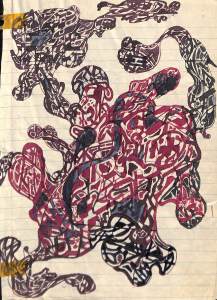
Very random and dense set of curved lines, randomly intersection, with many of the intesticies filled in with red or black ink.

His style remained . . . unformed. 

Most of the 1955-56 doodles are in this sort of ink — fountain pen?  By the next dated doodle — 1967 — he had discovered Flair pens, which would his preferred medium — for doodling, drafting analyses of fair employment laws, and writing long newsy letters to his kids — for the rest of his life. 

Most of his doodles seem to start with a random curvy line, and then go from there.  Some not very far:

Very basic line drawing of either a fish or torpedo.

Doodle consisting of single looping line, with a face (eyes; eyebrows; nose; smile) sketched into the loop.


Doodle consisting of single looping line, with a face (eyes; eyebrows; nose; smile) sketched into the loop, a heart sketched where the body would be, and lines suggesting (?) hands or feet.

Others were incredibly complex.

Doodle of an hourglass, the top of which reads "Policy" with arrows flowing toward the bottom, which includes the words "Implementation Staff."  There is a face at the narrow point of the hourglass, and a face in the "O" in Policy.

He mostly doodled on notebook or legal paper — and for a while the groovy colored notebook paper I favored in junior high school — but the collection also included hotel letterhead, conference folders, a page of statutory language,

Bird-like doodle over top of an exerpt from the statute governing disclosure of confidential information by government employees.

a paper plate,

Very abstract doodle of squiggly lines drawn on a paper plate.

and a place mat — from, of all places, Moncton, New Brunswick. 

Abstract doodle of curving lines filling in the empty space of the Chinese style drawing from on a paper placemat from the Palace Grill, 871 Main Street, Moncton, New Brunswick.

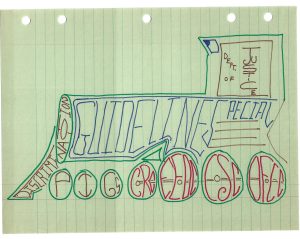
Many of the doodles were abstract, but there were recognizable themes.  He was a train buff, so

Doodle in the form of a train engine.  From left to right, the cow-catcher reads, "discrimination," the body of the engine reads, "Guidlines Special," the cab reads "Dept. of Justice," the wheels read P I Gs, CRC, EEOC CSC, and OFCC.

Doodle of a locomotive with train tracks appearing to swoop over the top of it from bottom left to rop right of the doodle.

and many seemed to represent fish in one way or another

Doodle of fish -- with very roughly the triangular shape of an angel fish -- with a green nose, and red, green and blue fins.

Doodle of a large fish with pointy teeth eating a much smaller fish.  The large fish contains the word "Reorganization;" the small fish contains the letters EEOC.

Some of my favorites were ones that incorporated words.  — some obviously related to the drawing itself:

Doodle of a watch (top left to bottom right) crossing what may be a horn (bottom left to top right). The watch face reads 11:30, and above and below it the word "Here's . . . ."; on the horn, the word Johnny.

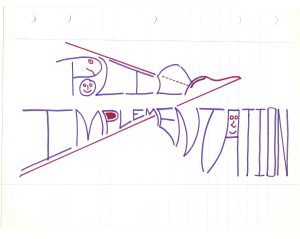
(He was a big Johnny Carson fan.)  With others, I could picture him bored in a meeting, hearing a phrase, and passing the time by doodling it, like the “Guidelines” train above, or: 

The words "Policy Implementation" doodled into the shape of what might be a plane or bird, with the P and the O in Policy, and the A in Implmenetation containing faces.

Complex abstract doodle of an airplane, with the words "But Will It Fly?" scattered throughout, along with several nervous-looking faces.

I’ll close with the doodle I found to be the most touching:

Doodle of a stylized number "73" with the words, "Ruth Is The One I Love" woven into the numerals.

Ruth is my mother.

*******************************************************

Coda: I found the alt-text descriptions fun and very very challenging.  I hope they are helpful to blind readers.  If you’re sighted and feel like weighing in on my descriptions, that would be fun, too. 

EEOC Diary: February 6 to April 4, 1967

Title: EEOC Diary

Date:  February 6 through April 4, 1967

Overview: PCR keeps a diary of his first two months working at the U.S. Equal Employment Opportunity Commission.

Link to original:  [in progress]


Introduction: 

My father started work at the Equal Employment Opportunity Commission (EEOC) in early 1967. He had been the Executive Director of the Missouri Commission on Human Rights from 1963 to 1967, and was recruited to come to DC and work for newly-appointed EEOC Chair Steve Shulman. Dictating into a Dictaphone was his primary means of writing, and he decided to keep a diary of his first few months at EEOC by dictating — in some detail — the activities of each day. After he passed, this 166-page document was among his papers.  After scanning and OCR’ing, it’s taking a while to clean up, so I’ll be posting in pieces.  Here, first, is one of my favorite excerpts, from the week of March 6-10, 1967. 

[Percy Williams, an African-American member of the President’s Committee on Equal Employment Opportunity told him] “Pete, you have done a fantastic job and I have certainly been proven wrong. On that day when you came in to see me I would not have given 10¢ in Chinese money for your chances of doing anything.” Percy was of course right in a sense in his appraisal of me. I was a typical white liberal at that time having certain feelings that what was going on in our society with Negroes was wrong and feeling that there was a little discrimination in our society but having absolutely not the foggiest notion of how widespread it was, how deep rooted it was, how hard it would be to root out, how much white people lied about it and what pervasive derrogating effect it had had in oppressing a whole group of people. How well I realize this now, to what extent I am really sensitive, to what extent I have no vestiges of subconscious prejudice on my own I am not prepared to say but I surely have advanced from the stage which I had when I was in college for I considered it liberal that I had once upon a time had lunch with a Negro in his own home, that I had gone to a boarding school which had one dark skinned foreign student in it, that I had belonged to the NAACP in college and been friendly with several Negro students, and that I always smiled and spoke politely to Negroes whom I met in public such as saying hello when I passed a Negro in an elevator or on the sidewalk.

He goes on to describe some of the concrete things he has done to promote equality, including picketing Woolworth’s and acting as a proto-housing-tester, but I was struck — though not surprised, for reasons I’ll write about later — that he was conscious even in 1967  of the limits of his ability, as a white person, to understand racism. 

WILL THE REAL “FORCED HOUSING” PLEASE STAND UP

Title: WILL THE REAL “FORCED HOUSING” PLEASE STAND UP

Date: Sometime between 1963 and 1967.

Overview: PCR debates real estate developer – and fair housing opponent – Ray Brummet.

Link to original:   https://petercrobertsonarchive.com/wp-content/uploads/2018/11/will-the-real-forced-housing-please-stand-up.pdf


Excerpt:

Mr. Brummet is in the process of constructing in Jefferson City one of its largest and most attractive suburban developments. … [He] has talked at length about not interfering and forcing something upon the owner of real property but yet he knows and I know that in establishing this subdivision he was protected by the knowledge that government will protect him, that society has made certain value judgments and will exercise them to protect him from anyone who would buy property in that subdivision and use it in such a way that would be harmful to the residential character of the neighborhood. Thus, Mr. Brummet, if I were to purchase one of your houses I would be forced to refrain from utilizing it to establish a filling station, a vulcanizing plant for putting retreads on old tires, a bar or a brothel. Mr. Brummet I am sure does not oppose this force being placed upon me. It seems to me that the same society which gives meaning and strength to the term private property by protecting it with police power and which forces the owner of the property not to use it in certain ways can also make the policy decision that it is in the interest of the kind of society which he wants to say that the individual can continue to dispose of his property in an unfettered fashion with the sole exception that he cannot discriminate in making that disposition because of the race of the party to whom he is selling.

Full text:

It is always a pleasure for me to appear on a platform with Ray Brummet, one of our leading real estate dealers in Jefferson City and perhaps one of the leading real estate dealers in the nation in terms of his honest willingness to publicly admit and state the point of view of the real estate industry. While I will tonight rather strongly attack some of the things which he has said because I believe they are based on misconception, I want to make it clear that I am in no way attacking him personally for I have the greatest respect for his ability as a real estate operator, for his talents as a businessman who is, as he suggested, in this field for the sole purpose of making money and not for the purpose of engaging in any social experimentation. He has outlined to you tonight the classic statement of the position of the real estate industry a position which some members of that profession sometimes adher[e] to more in theory than in practice — but nonetheless the basic theories on which they operate when they discuss problems of integrated housing.

Because Mr. Brummet has placed so much emphasis in his remarks upon the “social significance of real property” in a capitalistic free enterprise system and because he has based so much of his own opinions, views, and actions upon his own desire to make money I thought I would start out this evening by giving you a few ideas on my own frame of reference as to the “social significance of real property”, and the importance of deeply reconsidering the way we currently handle real property transactions in a free enterprise capitalistic economy. Continue reading “WILL THE REAL “FORCED HOUSING” PLEASE STAND UP”

Notes for speech on the history of Title VII

Title: Unknown

Date: Sometime after 1991 based on reference to 1991 Civil Rights Act

Audience:  Unknown

Link to original:  https://petercrobertsonarchive.com/wp-content/uploads/2017/04/speech-fragment-scanned.pdf


In a sense the legal history should tell us what happened when T7 was created from the primordial oooz — from amorphous cosmos — the unformed mass.  When the Congress said “let there be light” what did they mean.

But I have decided to do something else.  I was out there in that primordial ooz — before the light was turned on — serving from 1963 ([illeg] I went to EEOC in 1967) as E.D. of the M.C.H.R. …. Trying occasionally to light a light but more often cursing the darkness.

[Because] much of the [legal history] + much of the early actions at EEOC involved attempts to create a law — a structure — a process that would [benefit] from the failures of and remove the limits of the states[,] I think it might be useful to start with a discussion of how the world looked to a state agency in 1963-1964.

Chron

Job week before [Birmingham] fire hoses.

Report after.
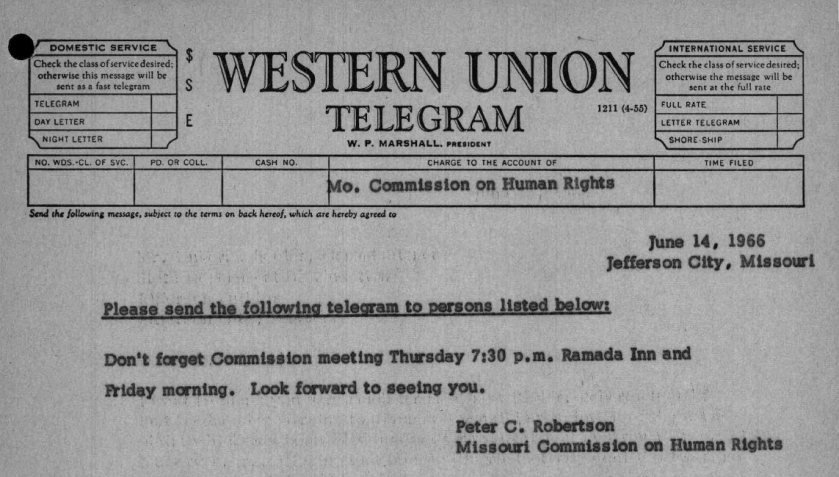
$12,000 budget

Governor ½|½  à Wallace; Ross Barnett; Orvell Fairbush

Scope of what we did was very [limited]

Any attempt (by those who file) to broaden was subject to political [attack]

  • Others similarly situated

phone call to CHAIR

  • Encourage filing

phone call to GOVERNOR

  • Initiate
    • Carson[’]s pledge on new money will not be used
  • If you ran into opposition you backed OFF
  • No litigation on vindicate powers. Surprize when arrive at EEOC to discover [illeg].

[Marginal note]:  New York amend rather than fight

  • And most important no [definition] of [discrimination]. 2 aspects
  • Procedural Philadelphia story
  • What did your [investigator] look for

Conciliation while under investigation

No body of law

Nothing called A.A. [assume “affirmative action”].

Harold Fleming

When I [arrived] at EEOC three dimension[s]

A.  Defend its process

Bill[’]s article

(Still true?)

B. Define discrimination

Norton 20

C. Legis[lative] hist[ory] that is most important

D. Impact on AA

  1. OFCCP
  2. EEOC focus on individual case[s] not systems
  3. 1991 C.R. ACT punish > d systems.

[Marginal note at “2” above]: Tell S. Story.  With occasional exceptions in one or two reg[ional] [offices]

Chronic refusal to look for + remedy systemic discrim[ination].

Speech: Missouri State Curriculum

Title: “Challenges That Must Be Met In Making Education Work In A Democracy When That Democracy Faces Controversies Such As Civil Rights.”

Date: 1964

Audience:  Unstated, but from context likely Missouri state education officials.

Link to original:  https://petercrobertsonarchive.com/wp-content/uploads/2017/02/curriculum-speech.pdf


It’s not often that I get a chance to hear the critique of previous speakers, tailor my remarks, and know what to say and what to avoid.  For example, I sat up until 2 o’clock last night preparing a very impressive list of proposed ideas for curriculum changes you might consider and I have now been told that you probably won’t do anything about them.  I’m not easily discouraged.

It’s certainly a pleasure for me to come here to discuss this topic with you.  I had thought I was going to discuss one topic and when the program arrived in the mail the topic that I was assigned was different — it was: “Challenges That Must Be Met In Making Democracy Work In an Era Marked by Civil Rights Controversy.”  I have taken the liberty of changing that a little bit. I have rearranged the word order: “Challenges That Must Be Met In Making Education Work In A Democracy When That Democracy Faces Controversies Such As Civil Rights.”  A slight change but I think after I looked over the outline that I had written that it seemed to fit a little better.

Because I interpret the scope of your organization as dealing primarily with curriculum I will direct my remarks primarily toward ideas that might be in your mind in developing curriculum in the future.
I realize full well that you probably can’t look at curriculum as an isolated item from the rest of the whole school administrative program.  Certainly you cannot talk about new curriculum ideas unless you have an idea where you’re going to get the people who will be able to teach them, or the facilities if need be, such as language laboratories if you are going to undertake a concentrated language instructional program.  You can’t do these in a vacuum without thinking of personnel, equipment and all other aspects of school administration, but, with that warning, I will aim my remarks primarily at curriculum.

Continue reading “Speech: Missouri State Curriculum”